Village Hall, Meet Rotor Wash: A Pilot's Guide to Keeping Drone Noise Off the Agenda
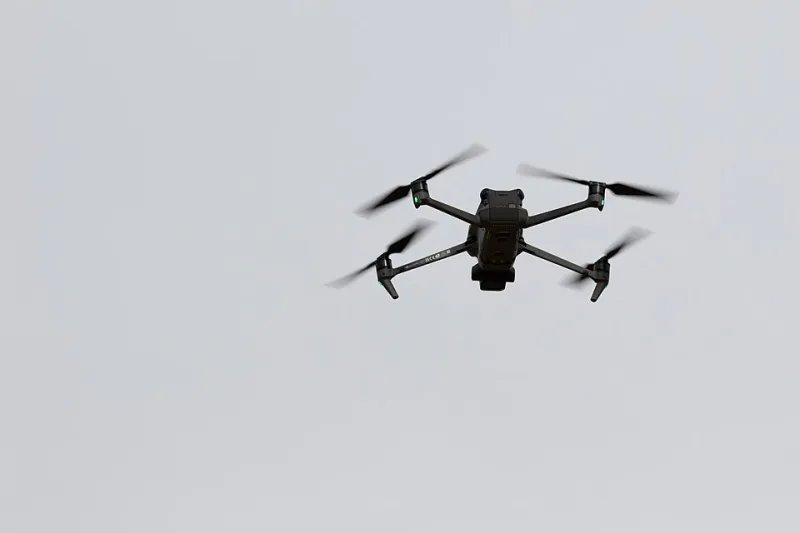
Photo: U.S. Army 153PAD by Pfc. Ayden Norcross, Public domain, via Wikimedia Commons
There is a particular kind of UK complaint that starts quietly. A drone lifts off for a ten-minute roof check, hovers a bit longer than planned, and by teatime someone has emailed the parish clerk about the buzzing over their garden. Nobody involved is a villain. The pilot is trying to do a tidy job. The neighbour is trying to enjoy their Sunday. But in 2026, drone noise is becoming a local politics issue as much as a technical one, and the pilots who cope best are the ones who treat it that way before the first launch.
The complaint is rarely about the decibel reading
Most drone noise complaints do not arrive with calibrated measurements. They arrive as a feeling: it was there again, it was over my fence, it spoiled the afternoon. Under the Environmental Protection Act 1990, local authorities can deal with statutory nuisance, and noise from premises or machinery can become part of that conversation. A single short flight is unlikely to be the whole story. Repetition, hovering and a sense of being watched are what turn a hum into a grievance.
Planning is not usually the direct lever either, despite the headline worry. A drone flight is not normally a planning application. But planning conditions, event permissions and construction site arrangements can all mention drone use, and parish councils increasingly ask questions when residents complain. The practical lesson is simple: if your work is visible and repeatable, expect it to be noticed, and make sure the notice is friendly rather than formal.
What you actually control: props, distance, timing and duration
You cannot control the weather, the neighbour's mood or the local council's meeting schedule. You can control the four things that matter most.
Props. Use the manufacturer's approved low-noise propellers if they are offered for your airframe, and keep them clean and balanced. A nicked leading edge or a loose set of blades makes a whine that travels. Avoid Sport mode over residential roofs, ease the sticks, and do not turn a simple inspection into a series of aggressive punch-outs. Smooth inputs are quieter inputs.
Distance. Noise drops off with distance, roughly 6 dB per doubling of distance in free air. That is not a licence to fly at the edge of visibility, but it is a reason not to creep closer than the job needs. If a 35 mm equivalent view from 40 m tells the story, do not drift to 15 m for a more dramatic frame. The dramatic frame is the one that gets remembered by the person making tea in the kitchen below.
Time of day. Early Sunday mornings, school pick-up, Saturday lunchtime and the start of a bank holiday weekend are all high-risk windows. Check local byelaws and any landowner conditions, then add a bit of common sense. A mid-morning Tuesday flight over an empty office roof is a different social event from a 7am hover over a suburban cul-de-sac.
Duration. Hovering is the noise that annoys. Plan the shots on the ground, fly the passes, and get out. If you need twenty minutes of roof detail, split it into short hops rather than one long, drifting loiter. A drone that appears, works and leaves is easier to forgive than one that seems to be loitering with intent.
Hover patterns are a social skill
A pilot sees a stable hover as good airmanship. A neighbour sees a machine sitting above their garden. If you must hold position, do it over the property you have permission to survey, not over the boundary hedge. Use angled transits, keep the aircraft moving with purpose, and avoid repeating the same low pass over the same patch of sky. If the job needs a lot of detail, climb a little, widen the shot and crop later. The view may be less cinematic, but the parish inbox stays quieter.
Courtesy is a paper trail, not a vibe
Being nice is good. Being nice with a record is better. Before a residential job, note the date and time window, the property, the landowner's permission, the purpose of the flight, the maximum altitude you expect to use, the prop type fitted and any neighbours you notified. A short note through the door or a quick word over the fence is often enough, but write down that you did it. If someone later says nobody told them, you have a factual record rather than a memory contest.
If a neighbour does approach, stop if it is safe, listen, and give them a contact route. Do not argue about perceived loudness from behind the controller. If they raise a concern with the council, respond factually and offer to adjust timing or routing. A pilot who says 'fair enough, I will move the hover point and fly after 10am' is much easier for a clerk to deal with than one who quotes the CAA at them. The CAA regulates airspace, not neighbourly goodwill.
A short pre-flight courtesy checklist
- Confirm landowner consent and any conditions attached to it.
- Check local byelaws, event restrictions and any site-specific drone rules.
- Look at the airspace and NOTAMs, even for a small job.
- Tell immediate neighbours if the flight will be visible and repeatable.
- Fit approved low-noise props and check for damage.
- Keep hovers over the consented property, not the boundary.
- Log the time, duration, altitude and any complaints or conversations.
None of this guarantees a quiet life. Some people dislike drones on principle, and some councils are quicker to log a complaint than to ask what the flight was for. But the quiet airframe is not just a piece of hardware. It is a habit: shorter flights, better props, sensible distance and a courtesy note that turns a potential parish council problem into a dull piece of paperwork. In 2026, dull paperwork is underrated.