When the Claim Form Lands: What UK Drone Insurance Really Pays For in 2026
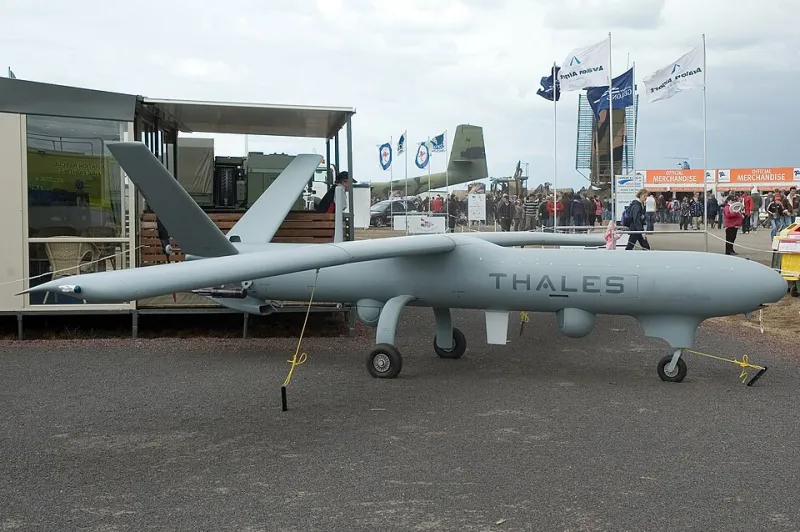
Photo: Robert Frola, GFDL, via Wikimedia Commons
Insurance renewals have a way of arriving at the worst possible moment. You are halfway through a busy autumn of roof surveys, the weather is doing its usual November thing, and an email lands with three PDFs and a headline premium that looks suspiciously reasonable. The trick with UK drone insurance in 2026 is not finding the cheapest quote. It is working out which of those PDFs would actually pay out if the aircraft came down in a field, clipped a gutter or vanished over a housing estate. This is not legal advice, and it is not a substitute for reading the wording. It is a practical map of the questions worth asking before you renew.
Public liability is the baseline, not the whole policy
Public liability is the cover most UK pilots think about first, and for good reason. It deals with injury to other people and damage to their property — not damage to your own drone. For commercial operations, third-party liability cover is usually a legal requirement under the insurance rules that apply to aircraft operators, and it is often a condition of site access even for hobby flights. A landowner may ask for £5 million before you launch from their field; a venue may want £10 million before you film their event.
The headline limit is only half the story. Check who is insured, what aircraft are listed, and whether the policy defines commercial use more widely than you expect. A policy sold for recreational flying may exclude anything that looks like business activity, including footage shot for a friend’s property listing or a unpaid test flight for a potential client. If you are VAT-registered, advertising or taking payment in any form, assume the insurer will ask questions.
Also look at the excess and the territorial limits. A policy that covers the UK may not automatically cover a trip to Ireland or a job on the Channel Islands. If you fly near water, over private land or around crowds, check whether those activities are excluded or require notification.
Hull, flyaway and payload: where claims get interesting
Hull cover protects the aircraft itself — airframe, gimbal, camera and sometimes accessories. Some policies cover accidental damage, including crash damage; others cover only theft or total loss. The difference matters. A cracked landing gear leg after a heavy landing is a very different claim from a drone that is never seen again.
Flyaway cover is the one pilots ask about most. It usually responds when the aircraft is lost beyond recovery through a sudden technical failure or loss of control. Insurers tend to expect evidence: flight logs, last known position, battery data, a police report where appropriate and proof that you were flying within the policy conditions. A flyaway claim can be declined if the logs show you were beyond visual line of sight, flying in conditions outside the manual, or using a battery that had already been flagged as damaged.
Payload cover is easy to overlook. If you are carrying a specialist camera, a LiDAR unit or a thermal sensor, check whether it is insured as part of the drone or as separate equipment. A policy that covers a £1,200 airframe may not stretch to a £6,000 payload.
Privacy and legal cover: the quiet extra
Privacy cover is not a licence to fly over gardens. It is usually legal expenses cover for claims connected with privacy, data protection or nuisance. For commercial pilots filming people or property, that can be valuable, but it will not cover deliberate intrusion or flights that breach the CAA’s rules. If you are shooting in built-up areas, read the conditions around consent, notices and data handling. A policy may require you to follow a written privacy procedure, and an insurer may ask for it after an incident.
Match cover to the operation, not the aircraft
A common mistake is buying cover based on the drone’s price rather than the job. A £900 drone used for commercial roof inspections may need more liability cover than a £3,000 drone flown privately in open countryside. Think about the operation: where you fly, who is nearby, what you are filming, how often you fly and whether you use additional pilots or spotters.
If you add a second aircraft, a new pilot or a new type of work, tell the insurer. A policy may be void if the aircraft listed is not the one involved in the claim, or if the pilot does not meet the experience requirements. If you fly under a specific CAA permission or operational authorisation, make sure the insurer knows. Some wordings exclude flights that are not conducted in accordance with the regulator’s requirements.
What insurers ask for after an incident
After an incident, the claim is usually decided on paperwork as much as the damage itself. Expect to provide the flight log, maintenance records, pre-flight checks, operator ID and Flyer ID details, photos of the site, witness statements, repair quotes and proof of ownership. If the drone was lost, you may need a police crime reference or a formal lost-property report. If someone was injured or property was damaged, keep receipts and correspondence.
Good records make a claim easier to handle. A simple folder with the policy schedule, aircraft serial numbers, pilot certificates and recent flight logs is worth more than a vague memory of what happened. If you use a fleet, log which battery and which aircraft were used on each job.
A 2026 renewal checklist
- List every aircraft, payload and accessory you want covered, with serial numbers and replacement values.
- Write down the work you actually do: commercial, recreational, training, surveys, events, inspections or media.
- Check the public liability limit against client and landowner requirements, not just the cheapest option.
- Read the exclusions for commercial use, night flying, overflight of people, BVLOS, water and coastal operations.
- Confirm the excess, the claims notification period and the evidence the insurer expects.
- Ask whether privacy and legal expenses cover is included or optional.
- Check that additional pilots, spotters and subcontractors are covered.
- Run a imaginary claim scenario: if the drone hit a car today, would this policy respond?
Insurance is never exciting, but it is part of flying responsibly. The best policy is the one you understand before you need it — not the one you discover after the claim form lands.