The Handshake Before the Take-Off: How to Win Landowner Permission Across the UK
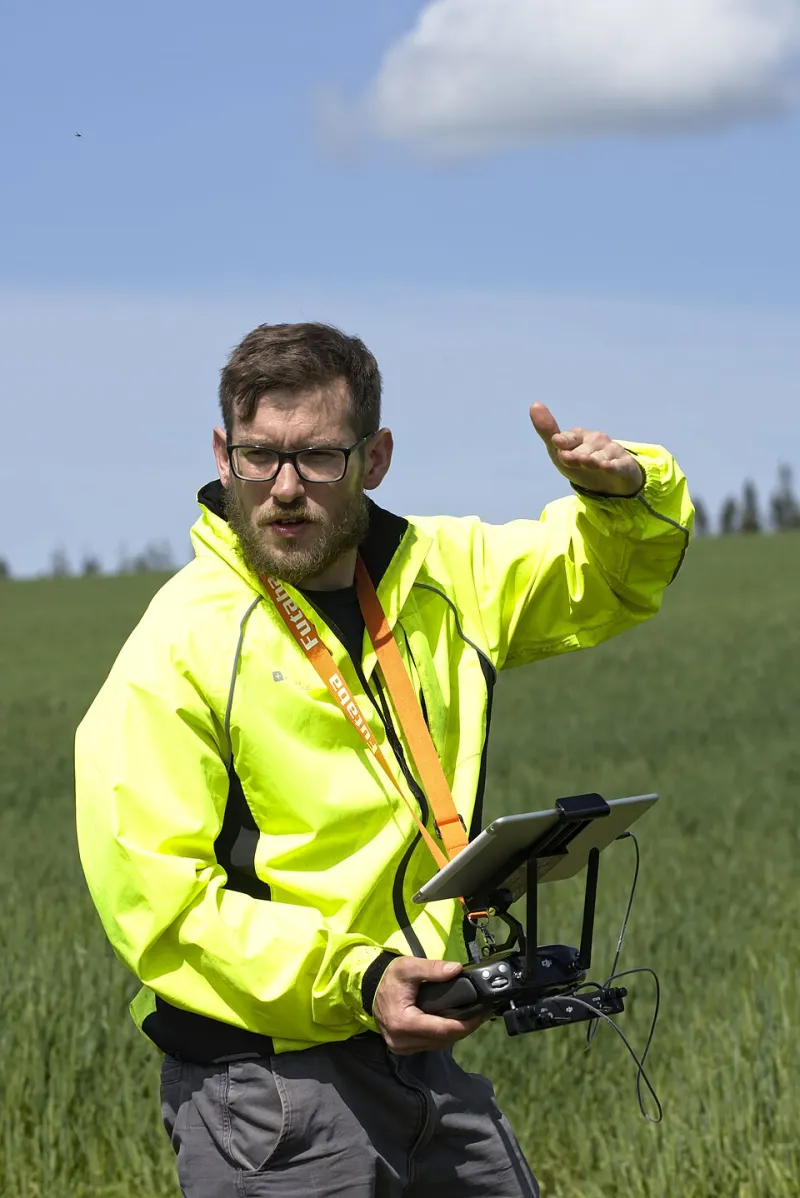
Photo: Magnus Hagdorn from UK, CC BY-SA 2.0, via Wikimedia Commons
There is a moment before every drone job on private land when the flight plan matters less than the handshake. You can have the right aircraft, a clean airspace check and a beautiful route in mind, but if the person who controls the gate, the field or the estate office has not been asked properly, the morning can unravel in a single conversation.
In the UK, drone permission is not one thing. The CAA regulates the airspace; the ground is a patchwork of ownership, access rights, bylaws and local custom. Understanding that difference is the whole game.
The legal right is not the whole story
A public right of way gives you a route across land. It does not automatically give you a launch pad, a parking space, a commercial filming location or a warm welcome. In practice, taking off and landing from a footpath can raise questions about obstruction, disturbance and whether the activity falls outside the public right. If you are flying commercially, the landowner or occupier may also want to know who is responsible, what insurance you have and how long you will be there.
The law around trespass and land access in the UK is not uniform, and bylaws can change the picture entirely. This is practical guidance, not legal advice. The safe and professional default is simple: if you need to stand on someone's land, open a gate, park a vehicle or launch from a specific spot, ask.
Public rights of way: walk, don't assume
Public footpaths, bridleways and byways are brilliant for access, but they are not a blanket drone permit. The highway authority maintains the route; the land underneath is often privately owned. You may be entitled to walk from A to B, but that does not mean the landowner has agreed to a drone operation beside their livestock or over their house.
If you are flying from a path, keep the launch area clear, do not block gates or stiles, and keep the aircraft away from people and animals. If the flight is commercial, or if you plan to return regularly, contact the landowner or the estate office. A short email often prevents a long argument.
National Trust and council land
National Trust land is a common flashpoint. Recreational drone use is generally not permitted on National Trust land without permission, and commercial filming usually goes through a formal permit process. Do not turn up at a car park, launch over a beauty spot and assume the countryside setting makes it acceptable. Contact the property office early, explain what you want to film and be prepared for a no.
Council land is just as varied. Parks, commons, country parks and seafronts may have bylaws, permit schemes or blanket restrictions. Some councils are helpful; others will ask for insurance, a risk assessment and a method statement. Check the council's parks or filming team rather than relying on a general website FAQ. If the land is managed by a trust, a friends group or a golf club, find the actual decision-maker.
Private estates: find the person who can say yes
The gatehouse can tell you where to park, but it usually cannot grant filming permission. For a private estate, start with the estate office, land agent or factor. On a sporting estate, the shoot manager or gamekeeper may be the person who knows the calendar. Lead time matters: a week is polite, a month is better for anything commercial.
Make the request easy to approve. Offer your insurance details, a short method statement, the dates and times you want, the exact fields or buildings you want to include, where you will launch and land, your maximum altitude and the number of people on site. Confirm that you will follow the CAA Drone Code, keep visual line of sight and check airspace before flying.
Avoid the obvious friction points. Do not ask for a Saturday in the middle of a shoot. Avoid lambing, calving and the main nesting season if you can. Keep away from farmyards, livestock, gardens and windows. If people are identifiable in your footage, think about data protection and privacy before you publish. A landowner is much more likely to say yes to a pilot who raises those issues first.
A printable permission-request template
Keep it to one page. Copy this into an email or print it for a site meeting.
Subject: Drone flight permission request — [date] — [location]
Dear [name],
I am [your name], a [hobbyist/commercial] drone pilot based in [town]. I would like to ask permission to access and take off and land from [specific location] on [date/time window] to capture [brief description].
- Aircraft: [model], [weight]g, sub-250g [or applicable category].
- Credentials: CAA Operator ID [number], Flyer ID [number], public liability insurance [insurer and policy number].
- Flight plan: launch and land at [point], maximum altitude [height], visual line of sight at all times, no flying over people or livestock.
- Purpose: [personal project / client filming / property marketing].
- Safety and privacy: I will check airspace and NOTAMs before flight, follow the CAA Drone Code, and avoid identifying individuals or private interiors without consent.
- Request: permission to access the site and launch/land from the point above, plus any conditions you would like me to follow.
I am happy to provide a risk assessment or method statement, and to share a preview of the final images. Please let me know if a different date or location would suit you better.
Kind regards, [your name] [phone and email]
The difference between a legal right and a warm welcome
Even where you believe you have a legal right to fly over land, you still need a warm welcome on the ground. Access, parking, gates, dogs, livestock and the goodwill of the person who knows the site are practical assets. A pilot who argues the law from the car park may win the point and lose the shoot.
Build relationships instead. Send a thank-you note. Share a low-resolution preview. Close gates, stick to tracks and leave no trace. The next permission is often easier because someone remembers that you were straightforward, insured and did not make their afternoon difficult.
Before you press send
Permission from a landowner is not the same as airspace clearance. Check NATS Drone Assist or another reliable UK source for flight restriction zones and NOTAMs. If you are near controlled airspace, an aerodrome or a sensitive site, make the additional calls. If you are flying commercially, make sure your CAA registration and insurance are in order.
Then ask nicely, put it in writing and turn up when you said you would. In UK drone work, the handshake before take-off is part of the flight.