Scuffed Props, Clean Paperwork: A Used Drone Inspection Plan for UK Buyers
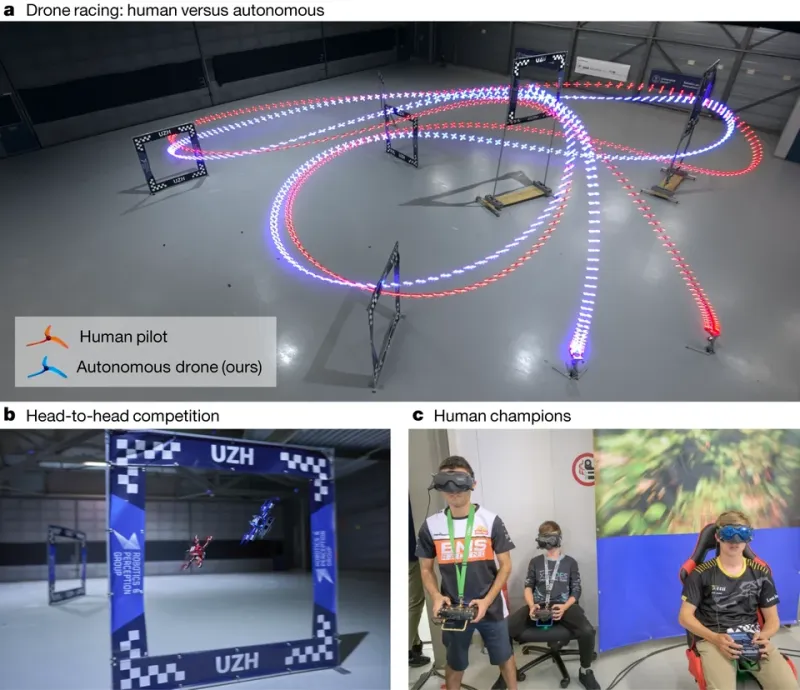
Photo: Authors of the study: Elia Kaufmann, Leonard Bauersfeld, Antonio Loquercio, Matthias Müller, Vladlen Koltun & Davide Scaramuzza, CC BY 4.0, via Wikimedia Commons
Second-hand drone listings have a familiar rhythm: a glowing description, a few photos taken in golden light, and a price that looks like a bargain until you notice the props have been sanded by a patio. In the UK, the used market is full of genuinely good aircraft — and a fair number that have been through a hedge, a firmware argument, or a commercial job they were never insured for. The trick is to treat the purchase like a pre-flight check, not a raffle.
Paperwork first, because stories don't fly
In the UK, CAA registration is personal. An Operator ID belongs to the person or organisation responsible for the flight, and a Flyer ID belongs to the person at the sticks. Neither is transferred with the airframe. So a seller showing you a valid Operator ID is useful evidence they have engaged with the rules, but it does not make you legal. You will need your own Operator ID before you fly, and a Flyer ID where the aircraft and flight require one.
Ask for the original purchase invoice, the box serial and any CAA correspondence. If the seller says it was used commercially, ask for the insurance certificate and the operational authorisation details. A drone that has been flown for paid work is not automatically a bad buy, but it has probably worked harder, and the paperwork should match the story. If the seller gets vague about insurance or cannot produce a record for a machine that has clearly been earning, price that uncertainty in.
Match the serials before you fall for the shell
Check the serial number on the airframe against the box, the listing and the flight app. DJI and Autel apps usually display the aircraft serial and each battery's serial. If the numbers do not match, walk away or renegotiate hard. Mismatched paperwork is the used-drone equivalent of a car with two VIN plates.
Then inspect the airframe properly. Scuffed props are normal; cracked props, delaminated blades, bent motor shafts and oval screw heads are not. Look at the arm hinges, the gimbal ribbon, the shell seams and the rubber seals. A tiny gap after a crash can let in the kind of Welsh drizzle that ends a flight day early. Ask directly whether it has been crashed, and watch the seller's face as much as the drone.
Batteries: cycle counts are the honest bit
Most modern flight apps report battery cycle counts, cell voltages and sometimes capacity. A pack with 30 cycles is barely run in; one with 150 cycles has had a life. Check the voltage spread at rest, look for swelling, inspect the terminals and note the date codes. Batteries are consumables, and a used drone with two tired packs is not the bargain it looks like once you price replacements.
If the seller cannot show cycle counts, assume the worst and negotiate accordingly. A quick hover test will not reveal a pack that sags under load five minutes into a job.
Gimbal, sensor and screen tests
Put the drone on a level table, power it up and let the gimbal settle. Watch for drift, twitching or a horizon that sits crooked without input. Calibrate the gimbal and compass only if the app asks; do not paper over a mechanical fault with a calibration routine. Check the lens for scratches, the sensor for dust and the gimbal ribbon for creases or exposed conductors.
Take a still and a short clip at each end of the zoom range if the camera has one. Look for soft corners, dust spots and dead pixels. Then check the controller: sticks that do not centre, a screen with delamination, or buttons that need a second press are all fixable, but they should come off the price.
Firmware, accounts and the binding trap
Ask for a screenshot of the firmware version and activation date. Firmware history is not a full service record, but a drone that has never been updated may have been parked for years. More importantly, check whether the aircraft is bound to the seller's account. On DJI models, account binding can complicate activation and service; the seller should unbind it before handover. If they cannot, treat it as a red flag or a job for the app's support team.
The test flight is non-negotiable
Meet somewhere legal and open, check the airspace before you go, and keep the flight short. Hover, yaw, pitch and roll. Tilt the gimbal through its range. Trigger return-to-home and watch how it behaves. Listen to the motors and check the controller connection and video feed. If the seller will not allow a test flight, the price should reflect the risk — and if they will not allow one at all, walk.
Depreciation and repair maths in 2026
Popular UK-owned models such as the DJI Mini 4 Pro, Air 3S and Mavic 3 Classic hold value reasonably well, but two-year-old examples typically trade well below new prices. The exact figure depends on condition, battery count and whether the original invoice is present. Budget for one replacement battery and a set of props on any used purchase; that is the realistic sorting-it-out fund.
Repair costs are where a cheap drone stops being cheap. A gimbal assembly can be a few hundred pounds fitted, while an arm or motor replacement is often £70-£150 depending on the model and workshop. Authorised repairs cost more but keep the service history cleaner. If the model is older or obscure, check parts availability before you buy.
The handover checklist
- Original invoice, box serial and any repair records.
- Aircraft, battery and controller serials matched to the app.
- Battery cycle counts and cell voltage spread noted.
- Seller unbinds the aircraft and signs out of the app in front of you.
- Written receipt with serial number, price, date and included accessories.
- Payment method with some protection, not a bare bank transfer to a stranger.
A used drone can be a sensible way into better gear, especially when new prices make you wince. But the bargain is in the inspection, not the listing. Check the paperwork, match the serials, read the batteries and fly it before you pay. The seller's story is a bonus; the airframe and the app data are the evidence.