Lights On, Rules Straight: Night Drone Imaging Across the UK in 2026
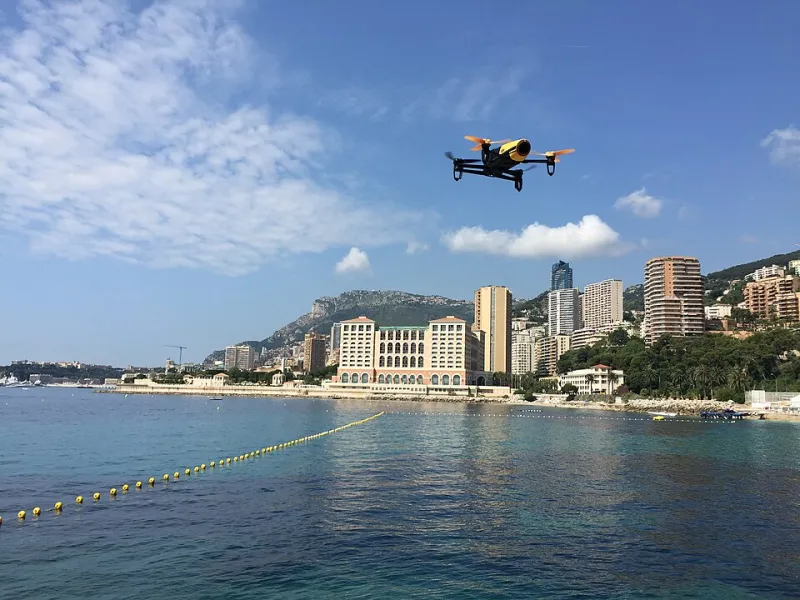
Photo: Halftermeyer, CC BY-SA 4.0, via Wikimedia Commons
By the time you have charged the batteries and cleared the boot, the UK sky has usually given up for the day. From November onwards, the temptation to chase lit-up high streets, winter markets and floodlit cathedrals is strong. Night aerial imaging can look superb, but it is also where casual pilots get sloppy. The rules do not disappear with the sun, and your margins get thinner.
This is not a scare piece. It is a practical guide to shooting after dark in 2026 without turning a nice evening out into a conversation with the CAA.
First, what the CAA actually expects
For most open-category flying, there is no separate night rating or night licence you can wave at a landowner. The same core limits apply: keep the drone in visual line of sight, stay below 120m, do not fly over assemblies of people, and respect airspace restrictions. What changes is that “seeing” your aircraft becomes harder. You need to be able to see the drone itself, not just the video feed on your controller. That is why lighting matters, and why a dark sky is not an excuse to rely on the screen.
If you operate under a specific-category authorisation, read the small print before you pack the car. Night operations may be excluded or conditioned in your paperwork. Insurance is another one to check — a policy that covers daylight commercial work may have something to say about low-light flights. And yes, the usual basics still apply: flyer ID, operator ID where required, landowner permission, local bylaws and any temporary restrictions.
The CAA’s expectation is not mysterious. Plan the flight, know your airspace, keep separation from people and property, and be honest about conditions. Darkness simply removes the room for guesswork.
Recce in daylight, fly in the dark
A night flight should be planned while you can still see the ground. Walk the site in the afternoon if you can. Note the obvious hazards — overhead cables, lamp posts, trees, scaffold, reflective glass — and the less obvious ones, like crowd flows, dropped kerbs and the route a security guard might take when they spot you.
Check airspace properly before sunset. Use NATS Drone Assist and the CAA’s airspace maps, and look at NOTAMs for temporary activity. Winter is full of things that do not appear on a casual glance: fireworks displays, stadium events, market set-ups, road closures and low-flying helicopter movements. Weather deserves a second look too. Fog, low cloud, drizzle and gusty wind all show up differently at night, and cold air can make battery behaviour less predictable.
Choose your launch point for visibility and escape routes, not just for the view. A rooftop car park might give you a clean line on the town hall, but it may also be busy, windy and awkward for an emergency landing. The best night site is usually boring: open, permitted, away from crowds and with a clear place to put the drone down.
The line between atmosphere and a crowd
Night markets and lit-up shopping streets are exactly what makes winter aerial imaging appealing, and exactly where people gather. The open-category restriction on flying over assemblies of people still applies. Do not assume that darkness gives you cover or that a brief hover over a crowd is harmless.
A longer lens is your friend here. Shoot from the edge of the event, keep the drone over clear ground, and frame the scene rather than parking above it. If you cannot guarantee separation, do not take the shot. No client, portfolio or Instagram post is worth a careless pass over a packed Christmas market.
Privacy matters too. Flashing lights and shop windows make for attractive images, but hovering outside residential windows or following people along a street is poor practice and can land you in a needless argument. Keep the subject architectural, keep the duration short, and keep the drone moving through clear air.
Kit and lighting that earns its place
A visible strobe or anti-collision light is not a fashion accessory. It helps you keep orientation and maintain visual line of sight when the aircraft is against a black sky. Fit it securely, check it does not blind you or nearby people, and make sure it does not interfere with the drone’s own sensors. A small torch and a red headlamp are useful for the ground, but avoid waving white light around while you are trying to see the aircraft.
Warm batteries matter. Keep spares in an inside pocket or a insulated bag until you need them, and expect voltage sag in cold air. A reflective vest is not a legal requirement for recreational flying, but it makes you easier to find and slightly less suspicious when a venue manager walks over. A landing pad helps in wet grass, and a cloth for the lens is essential when the air is damp.
Do not try to light the scene with the drone. Auxiliary lights are for orientation and safety, not for turning a dark street into a film set. If a location is too dark, expose for the lights that are already there.
Camera settings for UK night scenes
Manual exposure is your starting point. City lights are bright and shadows are deep, so let the highlights guide you and lift the shadows later. Shoot RAW for stills if your drone allows it. A fixed white balance — somewhere around 3200K to 4000K for many UK street scenes — stops the camera chasing colour as you pan across different light sources.
For stills, keep ISO as low as conditions allow, often 100 to 800, and use a shutter speed that suits the wind. A one-second exposure can work on a calm night with a stable hover, but it will smear if the drone is drifting. Burst shooting and auto-exposure bracketing are more reliable than one heroic long exposure. Take three to five frames and blend later if needed.
For video, 25fps with a 1/50 shutter is the familiar starting point, but do not be afraid to raise ISO to 800 or 1600 on modern sensors. Keep the frame rate consistent, avoid digital zoom, and use a flat or log profile only if you actually plan to grade it. Many current drones have a night mode, but treat it as a tool rather than a guarantee. Check the footage on a larger screen before you call it a wrap.
A simple winter-market workflow
Arrive early, speak to the organiser, and explain where you intend to fly and for how long. Set a home point in a clear area, confirm your return-to-home altitude clears nearby obstacles, and keep it below the 120m limit. Brief a spotter if you have one: their job is to watch the air and the crowd, not the screen.
Fly in short passes. Start with a high, wide establishing shot, then move to the edge of the event for detail. Keep the drone in sight, monitor battery temperature and voltage, and land with more reserve than you would in summer. If security asks what you are doing, be polite, show your permissions if you have them, and do not turn a routine query into a stand-off.
When to pack it in
Night flying is less forgiving. Fog, freezing drizzle, low cloud, strong gusts and crowded streets are all good reasons to call it. So is that nagging feeling that you are pushing your luck for one more frame. The best night image is the one you can show without a raised eyebrow — and the one you can safely bring home.